
Can We Read Without Interpreting?
Why Would We Want To?

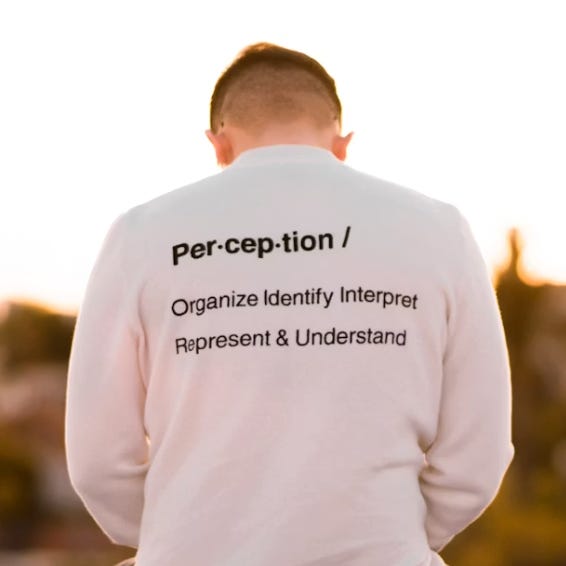
The relationship between reading and interpreting is as old as the first written language and its first reader. The connection can be debated, but not by serious readers who are reading serious documents.
To begin to answer the subject question, I would say “no”. Reading requires interpretation, and particularly when it comes to more complex writings. I initially considered “grocery lists” would be void of interpretation, but that’s not true at our house – probably not at your house either. Written instructions to assemble an item, or written directions to get to a certain location seem like they could be written in such a way that avoids the need to interpret. But we know that clarity is rarely the case. Over the last month, I’ve needed interpretation on grocery lists, been forced to consider various interpretations on assembly instructions for a griddle, and interpret a British female voice giving me navigational directions in and around Boston. I’ve concluded there is a need for interpretation when wording is unclear, the reader is unclear, or the author is intentionally unclear.
Speaking of intentionally unclear, legal documents require interpretation. Lawyers write in ways that favor their clients. Another person would need to hire a lawyer to interpret the document and edit it to level the playing field. AI may be about to pull the plug on that attorney job preservation tactic. We’ll see. AI is certainly irrelevant to this discussion.
In prior posts, and within the context of reading the Bible, I’ve mentioned the benefit of understanding author’s intent, word meanings, author and audience context, the paradox of wisdom literature, literary types, and the author’s literary structure – fundamental tools of interpretation.
Interestingly, I have met people who claim they didn’t interpret the Bible, and didn’t need to, because anything more than a simple reading distorts the message. If you run into such a person, keep running! Many of these people studied hermeneutics – the theory and methodology of interpretation. Go figure. They may have been serious, but their claim isn’t.
For people of faith, it seems The Bible would require our best efforts in interpretation. Consider the various time, language, and cultural contexts, the complexity of translating multiple languages, and the numerous authors’ and audience contexts. For the language situation alone, consider that many of the OT events occurred prior to written languages, and happened to Jewish people who would’ve been re-telling those stories in Semitic languages, including Ancient Hebrew. Then, authors began writing the stories down, and evidence shows they documented the stories in Hebrew and Aramaic. In the second and third centuries BCE, Jewish scholars completed the Septuagint, a translation of the Hebrew Bible (OT) into Greek. Six hundred years later, Jerome translated the OT into Latin, from Greek, and nine hundred years after Jerome, Wycliffe translated the OT from Latin into English. A hundred and fifty years after Wycliffe, Tyndale began translating the OT from Hebrew into English, but was martyred before he completed it. Coverdale, thirty years after Tyndale, completed the OT, from Hebrew into English. That process, alone, screams of interpretation, and testifies to the complex inspiration and preservation of these ancient texts.
Before I close, though, I’d like to offer a practical example of the benefits of interpretation – the enlightenment we can receive from reading the spaces between the words.
In John 1, John masterfully writes, “In the beginning was the Word, and the Word was with God, and the Word was God. He was in the beginning with God. All things were made through him, and without him was not any thing made that was made. In him was life, and the life was the light of men. The light shines in the darkness, and the darkness has not overcome it.”
To John, the Word is Logos. Prior to John’s use of logos, the Greek speaking world understood the meaning of logos to be an active power of creative order. Heraclitus, in 500+ BCE coined the idea, and it was further developed by Plato and the Stoics around the third and fourth centuries BCE. A Jewish philosopher, Philo of Alexandria, in the 40 years before and after the birth of Jesus, connected the Greek concept of Logos with the Hebrew Scriptures. John wrote his gospel during the last decade of the first century CE.
So, John has a familiar concept to communicate, as he connects Logos to Jesus.
In verse 14, of John 1, John writes, “And the Word became flesh and dwelt among us….” Of all the church words in verse 14, I want to focus on “dwelt”.
Before proceeding, please see Colossians 1:19. There Paul writes, “For in him (Christ Jesus) all the fullness of God was pleased to dwell…” Scholars are fairly united that this letter was written in Greek around 60 CE, some 30 years prior to John’s gospel. With a little curiosity, you can see that Paul uses a word, katoikeo, that’s translated to English as “dwell”. Katoikeo is a common Greek word for “live with” or “reside”. John doesn’t use katoikeo. It seems intentional.
So, why doesn’t John use katoikeo? It was available. What does he use instead? John uses skenoo. Skenoo implies a tent, or a tabernacle. Camping. Temporary dwelling.
It seems clear that John is tying Jesus to creation – God dwelling with His creation – and then linking us to the original, blessed state of God and man dwelling together. John’s introducing the idea of a new creation! But tent and tabernacle also link us to the image of The Tabernacle, where God lived among His people during the Exodus wanderings. John is reinforcing many concepts, including Immanuel, or God with us.
If we read John 1, and only conclude through our interpretation that God lived with mankind for a time, is that so bad? No. But how much richer is the meaning when we interpret John’s intent, and read his intentional words in more descriptive language? Why wouldn’t we want to read more that way?